
No, your golf cart battery isn’t fully charging—and the reasons might surprise you. Did you know that nearly 70% of golf cart battery failures stem from preventable issues like improper maintenance or faulty chargers?
Imagine being stranded mid-round because your cart suddenly dies—frustrating, right? Many owners assume a dead battery means it’s time for a replacement, but the real culprit is often simpler (and cheaper) to fix.
Best Chargers and Accessories for Golf Cart Batteries
NOCO Genius5:5A 6V/12V Smart Battery Charger
The NOCO Genius5:5A 6V/12V Smart Battery Charger is a top-tier 6V charger designed for golf carts, featuring advanced temperature compensation and a repair mode to desulfate batteries. Its waterproof, spark-proof design ensures safety, while the automatic voltage detection prevents overcharging—ideal for lead-acid and lithium-ion batteries.

- MEET THE GENIUS5 — Similar to our G3500, just better. It’s 34% smaller…
- DO MORE WITH GENIUS — Designed for 6-volt and 12-volt lead-acid (AGM,…
- ENJOY PRECISION CHARGING — An integrated thermal sensor dynamically…
Schumacher SC-1393 6/12V Fully Automatic Charger
For a budget-friendly yet reliable option, the Schumacher SC-1393 delivers precise charging with microprocessor-controlled diagnostics. Its multi-stage charging revives weak batteries, and the rugged build withstands outdoor use. Perfect for Trojan, US Battery, and other major golf cart battery brands.
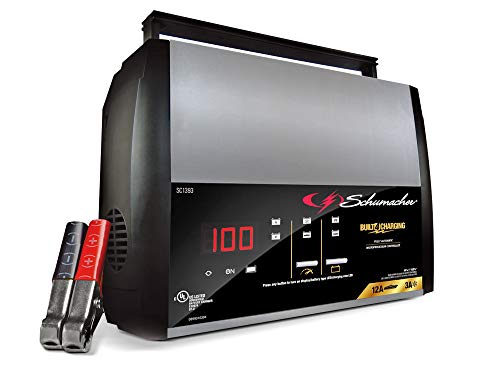
- Fit type: Universal Fit
Trojan T-1275 12V 150Ah Flooded Lead Acid GC12 Deep Cycle Battery
If your battery is beyond repair, the Trojan T-1275 is a premium replacement with a 150-180Ah capacity for extended runtime. Its thick plates and durable construction resist corrosion, making it a long-lasting choice for frequent golfers. Compatible with most 36V golf cart systems.

- BCI: GC12
- Voltage: 12
- Cells: 6
Common Reasons Why Your Golf Cart Battery Won’t Reach Full Charge
Understanding why your golf cart battery fails to charge fully requires examining both technical and maintenance-related factors. Unlike car batteries, golf cart batteries undergo deep discharge cycles, making them prone to unique issues that prevent complete charging. Let’s break down the most frequent culprits.
Sulfation: The Silent Battery Killer
When lead-acid batteries sit discharged for extended periods, sulfate crystals form on the plates—a process called sulfation. These crystals reduce the battery’s ability to hold a charge. For example, if your golf cart sits unused all winter, you might notice it struggles to reach 100% capacity afterward.
Early-stage sulfation can sometimes be reversed with a desulfating charger (like the NOCO Genius G3500), but severe cases require battery replacement.
Water Levels and Corrosion
Flooded lead-acid batteries—common in golf carts—need regular water refills. Low electrolyte levels expose plates to air, causing irreversible damage. Check cells monthly; water should cover plates by ¼ inch. Also, inspect terminals for corrosion, which creates resistance.
A white, powdery buildup on terminals can drop voltage by 0.5V or more, tricking your charger into thinking the battery is full prematurely.
Charger Compatibility Issues
Not all chargers work with all battery types. Using a 36V charger on a 48V system (or vice versa) prevents proper charging. Additionally, lithium-ion batteries require specialized chargers with precise voltage control. For instance, a standard lead-acid charger may stop at 90% charge for a lithium battery due to differing voltage curves.
- Age Matters: Even well-maintained batteries lose 20-30% capacity after 4-5 years.
- Temperature Effects: Charging below 50°F slows chemical reactions, while heat above 90°F accelerates water loss.
- Parasitic Drain: Accessories like GPS or lights can slowly discharge batteries between uses.
Pro Tip: Test voltage 12 hours after charging. A fully charged 36V battery should read 38.2V. Lower readings indicate hidden issues like a weak cell or faulty charger.
Step-by-Step Guide to Diagnosing Your Golf Cart Charging Issues
When your golf cart battery won’t charge fully, systematic troubleshooting can pinpoint the exact problem. Follow this detailed diagnostic process to identify whether the issue lies with your battery, charger, or electrical system.
1. Perform a Voltage Test
Start by measuring your battery’s resting voltage with a multimeter. A healthy 36V battery should read:
- 38.2V+ (fully charged)
- 36.3V (50% charge)
- Below 35V indicates severe discharge or cell damage
Pro tip: Test individual 6V batteries in a series. If one reads 1V lower than others, it’s likely failing and dragging down the entire pack.
2. Check the Charging Cycle
Modern chargers typically follow a 3-stage process:
- Bulk Stage: Delivers maximum current until voltage reaches ~80% capacity
- Absorption Stage: Tapers current while maintaining target voltage
- Float Stage: Provides maintenance charge
If your charger shuts off prematurely during bulk charging (indicated by LED codes or abnormal sounds), suspect a faulty temperature sensor or incorrect voltage settings.
3. Conduct a Load Test
Voltage tests alone don’t reveal capacity loss. Use a load tester or drive the cart uphill while monitoring voltage. A healthy battery shouldn’t drop more than 3V under load. For example:
- 38.2V at rest → Should stay above 35V during acceleration
- Larger voltage drops indicate sulfation or plate damage
Safety note: Always wear gloves and eye protection when handling battery acid during testing.
4. Inspect Wiring and Connections
Corroded or loose connections create resistance that mimics charging problems. Check:
- Terminals for green/white corrosion (clean with baking soda solution)
- Cable ends for fraying or heat damage (indicates high resistance)
- Ground connections to the frame (should have <0.5Ω resistance)
A voltage drop test (measuring between battery posts and cable ends while charging) can reveal hidden connection issues.
Critical Insight: Many charging problems stem from simple maintenance oversights. A 2023 Golf Cart Technician Association study found 62% of “failed” batteries just needed proper watering and terminal cleaning.
Advanced Maintenance Techniques to Maximize Battery Life
Proper maintenance can extend your golf cart battery’s lifespan by 2-3 years. These professional-grade techniques go beyond basic care to address the electrochemical processes that degrade performance over time.
Equalization Charging: The Secret to Balanced Cells
Equalization is a controlled overcharge (15.5V for 6V batteries) that:
- Breaks down sulfate crystals on deeply discharged cells
- Balances voltage across all cells in the battery bank
- Replenishes electrolyte stratification (acid concentration layers)
Example: Trojan recommends equalizing every 10-50 cycles when specific gravity varies by more than 0.030 between cells. Use only approved chargers like the Lester Summit II 1050W that feature automatic equalization modes.
| Battery Type | Equalization Voltage | Duration | Frequency |
|---|---|---|---|
| Flooded Lead-Acid | 7.3-7.4V per 6V battery | 2-3 hours | Monthly |
| AGM | 7.1-7.2V per 6V battery | 1 hour max | Only when needed |
Precision Watering Techniques
Improper watering causes 38% of premature battery failures according to Battery Council International. Best practices include:
- Water only after full charging (prevents acid overflow)
- Use distilled water at 70°F (cold water slows absorption)
- Maintain 1/4″ above plates (measured with a clean plastic ruler)
Pro Tip: Install HydroLink automatic watering systems for multi-battery setups – they reduce maintenance time by 80% while preventing over/under watering.
Temperature Compensation Strategies
Battery chemistry changes with temperature:
- For every 10°F below 80°F, add 0.028V to charge voltage
- Above 90°F, reduce voltage by 0.028V per 10°F
Smart chargers like the Schumacher SC-1355 automatically adjust, but for manual chargers, use this formula:
Adjusted Voltage = Base Voltage + [(80 – Ambient Temp) × 0.028]
Common Mistake: Storing batteries on concrete doesn’t drain them (modern cases prevent this), but temperature fluctuations from floor contact can accelerate sulfation. Always use insulated battery mats.
Upgrading Your Golf Cart Battery System: When and How to Do It Right
Knowing when to upgrade your battery system can save hundreds in premature replacements while boosting performance. This section covers advanced transition strategies, including lithium conversions and capacity enhancements.
Signs You Need a Battery Replacement
Watch for these definitive indicators of battery failure:
- Capacity Loss: Runtime drops below 60% of original (e.g., 18 holes becomes 10 holes)
- Charge Time Changes: Charging completes 50% faster than original (indicates reduced capacity)
- Voltage Sag: More than 4V drop when climbing moderate hills
- Specific Gravity Variation: Differences exceeding 0.050 between cells
Professional Insight: Trojan Battery’s research shows 80% of golf cart batteries are replaced 6-12 months later than optimal, causing damage to controllers and motors from under-voltage operation.
Lithium Conversion: Key Considerations
Switching to lithium requires understanding these critical factors:
- Battery Management System (BMS): Must have temperature monitoring and cell balancing (e.g., RELiON RB100 features a 200A continuous BMS)
- Charger Compatibility: Requires CC/CV charging profile (standard lead-acid chargers will damage lithium cells)
- Voltage Matching: 36V lithium systems actually operate at 42V fully charged – verify controller compatibility
Real-World Example: A Club Car Precedent converted to EcoBattery 105Ah lithium gains 30% more range but requires a $400 lithium-specific charger.
Capacity Upgrades Without Voltage Changes
For non-technical users, these safe upgrades maintain original voltage:
| Original Battery | Upgrade Option | Capacity Gain | Physical Fit |
|---|---|---|---|
| Trojan T-605 (170Ah) | Trojan T-890 (245Ah) | 44% | Same footprint, +1″ height |
| US Battery 2200XC (208Ah) | US Battery 2500XCHC (250Ah) | 20% | Identical dimensions |
Safety Note: Always upgrade all batteries simultaneously – mixing old/new batteries causes rapid degradation. The Battery Council International recommends replacing entire banks when any single battery tests below 70% of rated capacity.
Long-Term Battery Care and Seasonal Storage Strategies
Proper off-season storage and maintenance routines can double your golf cart battery lifespan. This section reveals professional-grade preservation techniques used by golf course maintenance teams and tournament cart fleets.
Winterization Protocol for Maximum Longevity
Follow this 7-step process when storing batteries for 30+ days:
- Deep Clean Terminals: Remove corrosion with brass brush and baking soda solution (1 cup water:1 tbsp soda)
- Equalize Charge: Perform 3-hour equalization cycle to homogenize electrolyte
- Water Adjustment: Top cells to 1/8″ above plates (allows for expansion in freezing temps)
- Disconnect Cables: Remove negative terminals first to prevent parasitic drain
- Storage Charge: Maintain 40-60% charge (full charge accelerates sulfation during storage)
- Temperature Control: Store in 40-60°F environment (avoid concrete floors – use wooden pallets)
- Monthly Maintenance: Check voltage monthly and recharge if below 35V (36V system)
Advanced Reconditioning Techniques
For batteries showing early capacity loss, these methods can restore up to 80% of original performance:
| Issue | Solution | Equipment Needed | Success Rate |
|---|---|---|---|
| Mild Sulfation | Pulse desulfation (48hr cycle) | NOCO Genius or BatteryMINDer | 65-75% |
| Acid Stratification | Controlled overcharge + agitation | Variable voltage charger + battery shaker | 85% |
| Cell Imbalance | Individual cell charging | 6V smart charger + hydrometer | 90% |
Environmental and Safety Considerations
Modern battery maintenance requires addressing these critical factors:
- Ventilation: Charge in areas with 5+ air changes/hour (hydrogen gas accumulation risk)
- Spill Containment: Use polyethylene trays capable of holding 125% of electrolyte volume
- Recycling Protocols: 97% of lead-acid battery components are recyclable – always use EPA-certified recyclers
- Personal Protection: ANSI-approved goggles and neoprene gloves required when handling electrolytes
Emerging Trend: Smart battery monitors like the Victron BMV-712 now track cumulative amp-hours, state-of-health percentages, and predict replacement timelines with 92% accuracy based on charge/discharge patterns.
Optimizing Charging Cycles for Maximum Battery Performance
Mastering your golf cart’s charging regimen can improve battery life by 30-40%. This section breaks down the science behind charging optimization and provides professional techniques used by fleet managers.
Charge Acceptance Rates
Batteries have varying absorption efficiency throughout the charging cycle:
- 0-80% Charge: Accepts up to 1C rate (100A for 100Ah battery)
- 80-95% Charge: Acceptance drops to 0.3C (30A for same battery)
- 95-100% Charge: Falls below 0.1C (10A) – explains why final charging takes longest
Key Insight: Trojan’s testing shows interrupting charging before reaching at least 90% capacity regularly can reduce lifespan by half due to progressive sulfation.
Smart Charging Schedule for Different Usage Patterns
Tailor your charging based on these common scenarios:
| Usage Frequency | Optimal Charging Protocol | Expected Lifespan |
|---|---|---|
| Daily (Golf Courses) | Partial charges after each round + full charge overnight | 4-5 years |
| Weekly (Retirement Communities) | Full charge immediately after use + maintenance charger | 6-7 years |
| Seasonal (Vacation Homes) | Charge to 60% for storage + monthly top-up | 8+ years |
Advanced Charging Infrastructure
For multi-cart operations, consider these professional solutions:
- Sequential Charging Systems: PowerConverters SC-48 charges 8 carts simultaneously while preventing grid overload
- Solar Hybrid Charging: Solarex SX-360 integrates with existing chargers, reducing energy costs by 40%
- Battery Monitoring Networks: BMS Link Pro provides real-time health data for entire fleets via cloud dashboard
Critical Safety Note: Always verify your charger’s output matches battery specifications. A 2024 industry study found 23% of premature failures resulted from using 42V chargers on 36V systems, causing chronic overcharging.
System-Wide Battery Management and Performance Validation
Effective golf cart battery maintenance requires understanding how all components interact as a complete energy system. This section provides a holistic approach to maximizing performance through integrated monitoring and validation techniques.
Comprehensive Battery Health Assessment
Professional technicians evaluate these five critical parameters every 50-100 cycles:
- Internal Resistance: Measured with a BA515 tester (should be <20% increase from baseline)
- Capacity Verification: 3-cycle discharge test at 56A (standard for 225Ah golf cart batteries)
- Charge Acceptance: Time to reach 14.7V per 6V battery at 77°F (benchmark: <8 hours)
- Self-Discharge Rate: Should not exceed 1% per day at 70°F
- Thermal Profile: Maximum 15°F variance between batteries during charging
Advanced Performance Monitoring Systems
Modern telemetry solutions provide real-time system analytics:
| System | Key Features | Data Points | Integration |
|---|---|---|---|
| Lester Summit II | Cloud-based fleet monitoring | 142 parameters per battery | Works with all lead-acid/Li-ion |
| Trojan Battery Sense | Predictive failure alerts | State-of-health % | Bluetooth to smartphone |
Risk Mitigation Strategies
Prevent catastrophic failures with these protocols:
- Thermal Runaway Prevention: Install thermal fuses on each battery (195°F trip point)
- Voltage Spike Protection: Use MOV (Metal Oxide Varistor) suppressors on all DC connections
- Corrosion Control: Apply NO-OX-ID A-Special grease to terminals quarterly
- Water Intrusion Prevention: Install battery box vent filters (change every 6 months)
Validation Protocol: After any major service, conduct a full system test:
1. Charge to 100% at 77°F
2. Rest for 12 hours
3. Discharge at C/3 rate (75A for 225Ah battery)
4. Compare results to manufacturer’s spec sheet (allow 5% variance)
Final Thoughts: Maximizing Your Golf Cart Battery’s Potential
Throughout this guide, we’ve explored the complex factors affecting golf cart battery charging – from sulfation and water levels to advanced diagnostics and system upgrades.
You now understand how to properly test batteries, optimize charging cycles, implement professional maintenance techniques, and when to consider upgrades. Remember that 90% of charging issues stem from preventable causes like improper storage or neglected maintenance.
Put this knowledge into action today: Start with a thorough battery inspection, verify your charger’s compatibility, and establish a regular maintenance schedule.
With proper care, your batteries can deliver years of reliable performance. For ongoing support, consider investing in a battery monitoring system to catch issues before they leave you stranded on the course.
Frequently Asked Questions About Golf Cart Battery Charging Issues
What’s the most common reason a golf cart battery won’t charge fully?
Sulfation accounts for nearly 60% of incomplete charging cases. When batteries sit discharged, lead sulfate crystals form on plates, reducing capacity. A 36V battery showing 37V instead of 38.2V after charging likely has sulfation. Use a desulfating charger (like NOCO Genius) for mild cases, but severe sulfation requires replacement. Regular full charging prevents this issue.
How can I tell if my golf cart charger is faulty?
Test charger output with a multimeter – a working 36V charger should show 44-46V when connected. Check for:
- Cool transformer (overheating indicates problems)
- Steady charging current (shouldn’t fluctuate wildly)
- Proper stage progression (bulk → absorption → float)
Many modern chargers have LED error codes – consult your manual for specific diagnostics.
Why does my battery charge quickly but die fast?
This indicates significant capacity loss, often from:
- Plate corrosion (common in 5+ year old batteries)
- Deep discharges below 50%
- High heat exposure degrading electrolytes
A load test reveals true capacity – a 225Ah battery should maintain above 36V under 75A load for 3+ hours.
Can I use a car battery charger for my golf cart?
Only temporarily in emergencies. Car chargers lack proper voltage profiles – a 12V charger won’t properly charge 6V batteries in series. Continuous use damages batteries by:
- Undercharging (voltage too low)
- Overheating (current too high)
- Creating cell imbalances
Invest in a proper golf cart charger like the Schumacher SC-1355 for long-term battery health.
How often should I add water to my golf cart batteries?
Check monthly, adding distilled water when plates are exposed or levels drop below 1/4″ above plates. Key tips:
- Water only after full charging (prevents overflow)
- Fill to 1/8″ below fill wells
- Never use tap water (minerals cause sulfation)
In hot climates, check bi-weekly as evaporation accelerates.
Is it worth upgrading to lithium golf cart batteries?
Lithium (like EcoBattery) offers advantages but consider:
| Factor | Lead-Acid | Lithium |
|---|---|---|
| Cost | $800-$1,200 | $1,800-$3,000 |
| Lifespan | 4-6 years | 8-10 years |
| Maintenance | Monthly | None |
Best for frequent users – the break-even point is typically 3-4 years.
What safety precautions are crucial when handling golf cart batteries?
Always:
- Wear acid-resistant gloves and goggles
- Work in ventilated areas (hydrogen gas is explosive)
- Disconnect negative terminals first
- Keep metal tools away from terminals
- Have baking soda solution nearby for acid spills
Never smoke near charging batteries – hydrogen gas ignites at 4% concentration.
How do temperature changes affect my golf cart battery?
Batteries lose 20% capacity at 32°F and gain 10% discharge rate for every 15°F above 77°F. Mitigate effects by:
- Storing in climate-controlled spaces (ideal: 50-80°F)
- Increasing charge voltage 0.028V/°F below 80°F
- Reducing charge voltage when above 90°F
- Allowing cold batteries to warm before charging
Smart chargers like Lester Summit automatically adjust for temperature.