
If your golf cart batteries aren’t holding a charge, the answer isn’t always simple—but the culprit is usually improper maintenance, aging cells, or charging mistakes. Did you know that 80% of premature battery failures stem from preventable issues like undercharging or sulfation?
Imagine being stranded mid-round because your cart suddenly loses power—frustrating, right? Many owners assume batteries “just wear out,” but neglect is often the real enemy.
Best Golf Cart Batteries for Long-Lasting Performance
Trojan T-1275 12V 150Ah Flooded Lead Acid GC12 Deep Cycle Battery
Trojan’s T-1275 is a top-tier flooded lead-acid battery designed for golf carts, offering 150+ Ah capacity and a rugged build. Its thick plates resist corrosion, while advanced paste formulations minimize sulfation—ideal for frequent deep discharges. Trusted by golf courses for its 5+ year lifespan with proper maintenance.

- Trojan T-1275 Deep-Cycle Flooded/Wet Lead-Acid Battery
- This is the 150Ah, 12-volt deep cycle battery from Trojan. These can be…
- BCI Group Size: GC12 – Dimensions: Length: 12.96” (329mm); Width: 7.13”…
Lifeline GPL-L16T 6V-400AH Deep Cycle Battery
For maintenance-free reliability, Lifeline GPL-L16T 6V-400AH Deep Cycle Battery AGM battery delivers 220Ah at 6V, with spill-proof construction and vibration resistance. Its pure lead plates ensure faster recharging and 30% longer cycle life than standard options. Perfect for hilly terrains or extreme temperatures.

- Voltage: 6 Volts
- Amp. Hrs. 20 Hr Rate: 400
- Length 11.64″, Width 6.95″, Height 15.73″
EF EcoFlow Portable Power Station 3600Wh Delta Pro
Upgrade to lithium with EcoFlow’s Delta 1300, a 1.2kWh LiFePO4 alternative. Weighing just 30 lbs, it supports 2,000+ cycles and charges via solar in 3 hours. Includes a 12V output for golf carts, plus USB ports for accessories—ideal for eco-conscious users prioritizing weight savings.
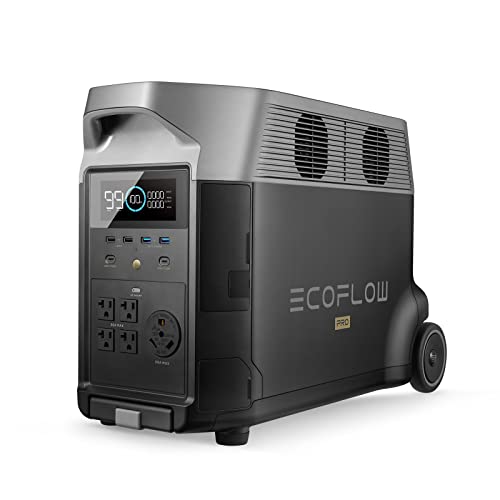
- 30% Tax Credit Could be Applied. You could apply for the Residential Clean…
- Large Capacity. Featuring a 3600Wh LFP battery capacity, DELTA Pro provides…
- Maximum Output Flexibility. A single DELTA Pro unit packs a 3600W AC…
Common Reasons Why Golf Cart Batteries Lose Charge Quickly
1. Sulfation: The Silent Battery Killer
When lead-acid batteries sit discharged for extended periods, sulfate crystals harden on the plates—a process called sulfation. This reduces the battery’s ability to hold a charge by up to 40%. For example, leaving your golf cart unused for two weeks at 50% charge can trigger permanent damage. To prevent this:
- Recharge immediately after each use (even if only partially discharged)
- Use a pulse desulfator (like BatteryMINDer) for maintenance
- Avoid storing below 12.4V (for 12V batteries)
2. Improper Water Levels in Flooded Batteries
Flooded lead-acid batteries (like Trojan T-1275) require distilled water to function. Low levels expose plates to air, causing:
- Irreversible plate warping
- Increased heat buildup during charging
- Reduced capacity by 15-20% per 1/8″ below recommended levels
Check water monthly—fill to 1/2″ above plates, but never overfill (which dilutes electrolyte). Hot climates may need bi-weekly checks.
3. Voltage Drop from Corroded Connections
A single corroded terminal can waste 30% of your battery’s power through resistance. Signs include:
- Green/white powdery residue on terminals
- Cart slowing on hills despite “full” charge
- Batteries feeling unusually hot after use
Fix it by cleaning terminals with a wire brush and baking soda solution, then applying dielectric grease. Torque connections to manufacturer specs (usually 8-10 ft-lbs).
4. Charger Compatibility Issues
Using a generic charger (like automotive models) can undercharge or overheat golf cart batteries. Lithium batteries require multi-stage chargers (e.g., EcoFlow’s 400W solar charger), while lead-acid needs temperature compensation. Key specs to match:
- Voltage: 36V/48V systems need corresponding chargers
- Amperage: 10-20% of battery Ah rating (e.g., 18A for 180Ah)
- Algorithm: AGM vs. flooded vs. lithium profiles
Pro Tip: Test voltage 12 hours post-charging—fully charged 6V batteries should read 6.37V; anything below 6.2V indicates problems.
How to Properly Maintain Golf Cart Batteries for Maximum Lifespan
1. The Right Way to Charge Your Batteries
Proper charging habits can extend battery life by 2-3 years. Always charge immediately after use – letting batteries sit discharged accelerates sulfation. For lead-acid batteries:
- Charge until the charger automatically shuts off (typically 8-10 hours)
- Never interrupt a charging cycle – partial charges create “memory effect”
- Use temperature-compensated chargers in extreme weather (adjusts voltage based on ambient temp)
Example: A 48V system should reach 51-52V when fully charged. If it only hits 49V, you likely have a bad cell.
2. Watering Flooded Batteries: A Step-by-Step Guide
Maintaining proper water levels is crucial for flooded batteries. Follow this professional procedure:
- Charge batteries fully first (water expands during charging)
- Use only distilled water – minerals in tap water damage plates
- Fill to 1/4″ below fill tubes – overfilling causes acid spills
- Check monthly (weekly in summer or heavy use)
Pro Tip: Mark water levels with a grease pencil for easy visual checks.
3. Equalization Charging: The Secret to Battery Health
Every 10-15 charges, perform an equalization charge to:
- Break down sulfate crystals
- Balance cell voltages
- Mix stratified electrolyte
Use a charger with equalization mode (like Lester Summit II) and follow this process:
- Ensure batteries are at least 75% charged
- Remove all loads from the system
- Run equalization cycle (typically 1-3 hours at higher voltage)
- Check water levels afterward (equalization causes more water loss)
Warning: Never equalize AGM or lithium batteries – this is only for flooded lead-acid types.
Advanced Battery Diagnostics and Troubleshooting Techniques
1. Conducting a Professional-Grade Battery Load Test
Standard voltage checks only reveal surface-level issues. A proper load test identifies weak cells by simulating real-world demands:
| Equipment Needed | Procedure | Acceptable Results |
|---|---|---|
| Carbon pile tester Digital multimeter Temperature gun | 1. Fully charge batteries 2. Apply 50% of CCA rating for 15 seconds 3. Measure voltage drop | 6V battery: ≥5.4V under load 12V battery: ≥10.8V under load |
Example: A 6V golf cart battery dropping to 4.9V during testing indicates a failing cell. Replace immediately to prevent damage to other batteries in the series.
2. Understanding Battery Chemistry Degradation
Three key chemical processes reduce battery performance:
- Positive Grid Corrosion: Lead dioxide converts to lead sulfate (irreversible after 30% conversion)
- Active Material Shedding: Paste detaches from plates (visible as dark sediment in flooded cells)
- Electrolyte Stratification: Acid concentration varies by depth (causes 15-20% capacity loss)
Professional Tip: Measure specific gravity in multiple cells – variations >0.030 indicate stratification requiring equalization.
3. Series vs. Parallel Configurations: Voltage Drop Analysis
Golf carts typically use series connections (batteries daisy-chained positive to negative). Common wiring issues include:
| Problem | Symptoms | Diagnosis Method |
|---|---|---|
| High resistance connection | One battery hotter than others | Infrared thermometer scan |
| Weak cell in series | Cart loses power abruptly | Individual battery load test |
Critical Insight: In a 48V system (eight 6V batteries), one weak battery reduces total voltage by ~7V under load – enough to trigger premature shutdown.
4. When to Repair vs. Replace: Cost-Benefit Analysis
Consider these factors before replacing your entire battery bank:
- Age: Batteries over 4 years old rarely benefit from reconditioning
- Voltage Variance: >0.5V difference between cells indicates irreparable damage
- Water Consumption: Needing weekly refills suggests excessive gassing from overcharging
Pro Tip: For 2-3 year old batteries, professional reconditioning services can restore up to 85% capacity at 40% of replacement cost.
Optimizing Battery Performance for Different Golf Cart Usage Patterns
1. Custom Charging Strategies for Usage Frequency
Your charging routine should adapt to how often you use your golf cart. Here’s how professionals adjust their approach:
- Daily Users: Implement a “top-off” charge 1-2 hours before use to compensate for overnight voltage drop (called “surface charge loss”)
- Weekly Users: Perform a full charge cycle mid-week, even if unused, to prevent sulfation buildup
- Seasonal Storage: For winter storage, charge to 100%, disconnect all loads, and use a maintenance charger (like Battery Tender) monthly
Example: A golf course that runs carts daily might use industrial smart chargers that automatically perform equalization cycles every 10 charges.
2. Terrain-Specific Battery Care
Hilly courses demand different battery management than flat terrains:
| Terrain Type | Battery Impact | Compensation Strategy |
|---|---|---|
| Hilly (15%+ grades) | 40% higher amp draw 15°F higher operating temps | Upgrade to 20% higher Ah capacity Install battery cooling fans |
| Flat terrain | Steady amp draw Minimal heat buildup | Standard maintenance Focus on charge cycle quality |
3. Advanced Temperature Management
Battery performance fluctuates 1% per 1°F change. Implement these thermal control measures:
- Insulation: Use closed-cell foam battery blankets in temperatures below 40°F
- Ventilation: Install cross-flow fans when ambient temps exceed 90°F
- Charging Adjustments: Reduce charge voltage by 0.003V/°F above 80°F (most smart chargers do this automatically)
Pro Tip: Battery compartments should maintain 60-80°F for optimal performance. Use a digital thermometer with min/max memory to track temperature extremes.
4. Load Management for Battery Longevity
Every additional accessory impacts battery life. Follow this power budgeting guide:
- Essential Systems: Motor (85% of load), lights (5%)
- Accessories: Stereo (3-8A), coolers (10-15A), phone chargers (1A)
- Safety Margin: Never exceed 80% of battery bank’s continuous discharge rating
Warning: Adding a 500W sound system to a stock 36V cart can reduce range by 30% and cycle life by 40% if not properly compensated with battery upgrades.
The Future of Golf Cart Batteries: Emerging Technologies and Sustainability
1. Lithium vs. Lead-Acid: A 5-Year Total Cost Analysis
While lithium batteries have higher upfront costs, their long-term value becomes clear when examining total ownership:
| Cost Factor | Flooded Lead-Acid | Lithium (LiFePO4) |
|---|---|---|
| Initial Investment | $800-$1,200 (48V system) | $1,800-$2,500 (48V system) |
| Cycle Life | 500-800 cycles (2-3 years) | 3,000-5,000 cycles (8-10 years) |
| Maintenance Costs | $150/year (water, equalization) | $0 (maintenance-free) |
| Energy Efficiency | 70-80% (20-30% energy loss) | 95-98% efficiency |
Real-world example: A golf course replacing lead-acid batteries every 2.5 years would break even on lithium in 4 years, then save $3,000+ per cart over 10 years.
2. Battery Recycling and Environmental Impact
Proper end-of-life handling differs significantly by battery chemistry:
- Lead-Acid: 99% recyclable – cores have $10-$30 scrap value. Recycling process recovers:
- Lead (reused in new batteries)
- Polypropylene cases (made into new containers)
- Sulfuric acid (neutralized or converted to sodium sulfate)
- Lithium: Emerging recycling methods recover:
- 80-90% of lithium carbonate
- 95% of cobalt and nickel
- Current recycling costs $1-$3/lb vs. $0.30/lb for lead
3. Smart Battery Management Systems (BMS)
Modern lithium systems include advanced BMS with these critical functions:
- Cell Balancing: Maintains ±0.02V difference between cells (vs. ±0.2V in lead-acid)
- Thermal Runaway Protection: Automatically disconnects at 140°F
- State-of-Health Monitoring: Tracks capacity fade with 1% accuracy
- Remote Diagnostics: Bluetooth connectivity for real-time monitoring
Pro Tip: Look for UL1973 or UN38.3 certified systems – these meet stringent safety standards for thermal and electrical stability.
4. Emerging Technologies: What’s Coming Next
The next generation of golf cart power solutions includes:
- Solid-State Batteries: 2x energy density of lithium, zero fire risk (expected 2026-2028)
- Sodium-Ion: 30% cheaper than lithium, better cold performance (already in Chinese golf carts)
- Supercapacitor Hybrids: Instant power recovery on hills, 100,000+ cycle life
Industry Insight: Major golf cart manufacturers are already designing next-gen chassis to accommodate these new power systems, with weight distributions optimized for solid-state battery placement.
Advanced Charging System Integration and Smart Technology
1. Multi-Stage Charging Algorithms Explained
Modern golf cart chargers use sophisticated charging profiles that adapt to battery chemistry and condition:
- Bulk Stage (0-80%): Delivers maximum current at constant voltage (14.4V for 12V lead-acid)
- Absorption Stage (80-95%): Gradually reduces current while maintaining peak voltage
- Float Stage (95-100%): Drops to 13.2V to prevent overcharging while maintaining full capacity
- Equalization (Lead-Acid Only): Periodic 15.5V pulses to desulfate cells
Example: A 48V lithium system might use:
Bulk: 58.4V @ 20A → Absorption: 58.4V @ decreasing amps → Float: 54.4V @ 1A
2. Smart Charger Networking for Fleet Management
Commercial operations now use networked charging systems with these capabilities:
| Feature | Benefit | Implementation |
|---|---|---|
| Load Balancing | Prevents circuit overloads | Automatically staggers start times |
| Priority Charging | Ensures critical carts charge first | RFID tag recognition |
| Energy Cost Optimization | Charges during off-peak hours | Utility rate integration |
3. Regenerative Braking Integration
Advanced golf carts now recover 10-15% of energy through braking systems:
- Controller Programming: Sets regeneration intensity (5-20 amps typically)
- Battery Compatibility: Requires high-C rate lithium or AGM batteries
- Safety Systems: Automatic disable at full charge state
Pro Tip: On hilly courses, proper regen setup can extend range by up to 8 miles per charge.
4. Solar Integration Strategies
Effective solar supplementation requires careful system design:
- Panel Sizing: 100W provides ~5A charge current in full sun
- Charge Controller: MPPT type preferred (93% vs PWM’s 70% efficiency)
- Battery Protection: Must prevent reverse current at night
Case Study: A 200W roof-mounted system with lithium batteries can provide 15-20 miles per week of solar-only range in sunny climates.
Comprehensive Battery System Optimization and Risk Management
1. Performance Benchmarking and Quality Assurance
Establishing baseline metrics is critical for ongoing battery health monitoring. Implement these validation procedures:
| Test | Methodology | Acceptable Range |
|---|---|---|
| Capacity Verification | Discharge test at C/20 rate to 10.5V (12V battery) | ≥95% of rated Ah capacity |
| Internal Resistance | AC impedance test at 1kHz frequency | <5mΩ per 100Ah capacity |
| Charge Acceptance | Measure current at 80% state-of-charge | ≥25% of initial bulk charge rate |
Example: A 200Ah battery showing 180Ah capacity and 8mΩ resistance needs reconditioning or replacement.
2. System-Wide Voltage Drop Analysis
Comprehensive electrical system evaluation should include:
- Cable Sizing: Minimum 4AWG for 48V systems (2AWG for runs over 15ft)
- Connection Integrity: All terminals should show <0.1V drop under load
- Parasitic Drain: Total standby current should be <50mA (with key off)
Pro Tip: Perform voltage drop tests at both battery posts and load points – differences reveal hidden resistance in cables/connections.
3. Advanced Failure Mode Analysis
Mitigate these high-risk failure scenarios with preventive measures:
| Failure Mode | Early Warning Signs | Preventive Action |
|---|---|---|
| Thermal Runaway | Battery temps rising 2°F/week | Install temperature-activated cutoff switches |
| Cell Imbalance | Voltage variance >0.3V between cells | Monthly manual balancing (lithium systems) |
| Acid Stratification | SG variance >0.015 between top/bottom samples | Quarterly equalization charges |
4. Long-Term Performance Optimization
Implement these professional maintenance protocols:
- Quarterly Load Testing: Verify capacity under 50% C-rate discharge
- Annual Recalibration: Reset battery monitoring systems to account for aging
- Biannual Torque Checks: Verify all connections at manufacturer specs
- Thermal Imaging: Annually scan all connections for hot spots
Critical Insight: Properly maintained lithium batteries show only 2-3% capacity loss per year versus 15-20% for neglected lead-acid systems.
Final Thoughts: Maximizing Your Golf Cart Battery Life
Throughout this guide, we’ve explored the key reasons golf cart batteries lose charge—from sulfation and improper watering to charging mistakes and connection issues.
You’ve learned professional maintenance techniques, advanced diagnostics, and how to optimize performance for different terrains and usage patterns. Whether you’re using lead-acid or lithium batteries, proper care can double or even triple their lifespan.
Now it’s time to take action. Start by performing a full battery inspection this week—check water levels, clean terminals, and verify charger settings. Remember, consistent maintenance is far cheaper than premature replacements. For optimal results, consider upgrading to smart charging systems or lithium technology if your budget allows.
Your golf cart’s performance and reliability depend on these power sources—treat them well, and they’ll deliver miles of trouble-free service.
Frequently Asked Questions About Golf Cart Battery Performance
What’s the average lifespan of golf cart batteries?
Lead-acid batteries typically last 4-6 years with proper maintenance, while lithium batteries can last 8-10 years. However, lifespan depends heavily on usage – a golf course cart used daily may need replacement every 3 years, while a weekend-use cart might last 7 years.
Key factors affecting longevity include charging habits (never letting batteries sit discharged), water maintenance (for flooded types), and environmental conditions (extreme heat reduces life expectancy).
How often should I water my flooded lead-acid batteries?
Check water levels monthly, or bi-weekly in hot climates. Only use distilled water and fill to 1/4″ below the fill tube after fully charging. Important: Never add water to discharged batteries as the electrolyte expands during charging.
A typical 6V golf cart battery consumes about 1 ounce of water per cell per month under normal use. Keep a log of watering dates to identify abnormal consumption patterns.
Can I mix old and new batteries in my golf cart?
Absolutely not. Mixing batteries of different ages or brands creates imbalance in the series circuit, causing newer batteries to overwork and fail prematurely.
When replacing, always change the entire set. Even batteries purchased together can develop variances – professional courses rotate battery positions every 6 months to equalize wear. A single weak battery (more than 0.5V difference) can reduce overall pack performance by 30-40%.
Why does my golf cart lose power going up hills?
This indicates either battery issues (weak cells can’t deliver needed current) or voltage drop in connections. First load test each battery – they should maintain at least 5.4V (6V) or 10.8V (12V) under hill-climbing loads.
Then check all cable connections for heat or corrosion. Upgrading to 2AWG cables (from standard 4AWG) can improve hill performance by reducing voltage drop by up to 1.5V on steep inclines.
Is it worth upgrading from lead-acid to lithium batteries?
For most users, yes – despite higher upfront cost. Lithium batteries provide: 3x longer lifespan, 50% more usable capacity, zero maintenance, and 30% weight reduction.
They pay for themselves in 3-5 years through reduced replacement and maintenance costs. However, they require a compatible lithium charger ($200-$400). Best for those using carts frequently or in extreme temperatures where lead-acid struggles.
How can I store my golf cart batteries over winter?
For lead-acid: Fully charge, clean terminals, disconnect cables, and store in a cool (not freezing) place. Use a maintenance charger monthly or keep on a float charger. For lithium: Charge to 50-60%, disconnect, and store indoors.
Unlike lead-acid, lithium suffers no damage at partial charge during storage. Both types should be checked monthly for voltage – never let lead-acid drop below 12.2V (12V battery) during storage.
What’s causing my batteries to get extremely hot during charging?
Excessive heat (over 110°F) indicates either:
1) Overcharging (faulty charger or wrong voltage setting),
2) Sulfation buildup increasing internal resistance, or
3) Short-circuited cells.
First verify charger output matches battery specs (58.4V for 48V lithium, 51V for 48V lead-acid). If correct, perform a load test to identify weak cells. Hot batteries lose 1% of lifespan per 10°F over 80°F – address this issue immediately.
Can I use automotive battery chargers for my golf cart?
Not recommended. Golf cart batteries require specific voltage profiles and charge algorithms. Automotive chargers often lack:
1) Proper voltage for series packs (36V/48V),
2) Temperature compensation,
3) Equalization modes for lead-acid, or
4) Lithium-specific charging curves.
Using wrong chargers can reduce capacity by 40% over time. Invest in a quality golf cart charger ($150-$500) – it pays for itself in extended battery life.