
Did you know lithium golf cart batteries last 3-5 times longer than traditional lead-acid options while weighing 50% less? If you’re tired of frequent replacements, sluggish performance, or hidden maintenance costs, the switch to lithium isn’t just an upgrade—it’s a revolution.
Golfers and course managers once accepted lead-acid batteries as the default, but lithium technology now delivers unmatched efficiency, durability, and long-term savings.
Best Lithium Golf Cart Batteries for Peak Performance
48V 105Ah Lithium Golf Cart Batteries
Built for extreme durability, the 48V 105Ah Lithium Golf Cart Batteries offers a 10+ year lifespan with 4,000+ deep cycles. Its advanced Battery Management System (BMS) prevents overcharging and overheating, while the lightweight design (138 lbs) improves cart efficiency. Ideal for golfers prioritizing longevity and fast charging (0% to 100% in 4 hours).
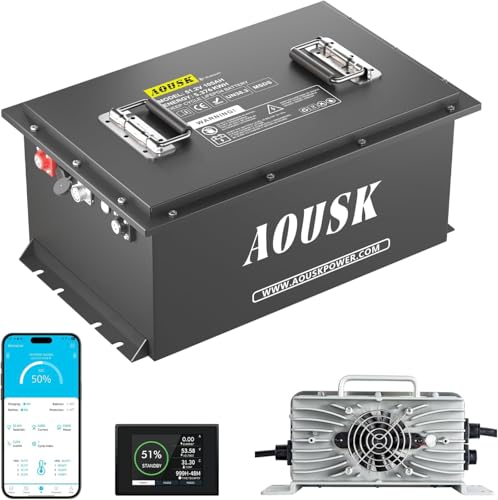
- 【Direct Drop-In Replacement 】AOUSK 48 volt lithium battery is made of…
- 【Smart BMS】Bluetooth-enabled touchscreen display with communication…
- 【Low-temperature protection 】Safe operation in diverse climate…
DC HOUSE 48V 50Ah LiFePO4 Golf Cart Battery
The DC HOUSE 48V 50Ah LiFePO4 Golf Cart Battery balances affordability with high performance, delivering 2,500+ cycles and a maintenance-free design. Its compact size fits most golf cart battery trays, and the built-in self-heating function ensures reliable operation in cold weather. Perfect for budget-conscious buyers seeking dependable power.

- Bluetooth APP Monitoring: DC HOUSE 48V50AH battery has built-in Bluetooth,…
- Low Temp Cut-Off: 48V 50ah lifepo4 battery has upgraded Low Temperature…
- 2C BMS Protection-Equipped with a robust Battery Management System (100A…
VATRER POWER 48V 100Ah Lithium LiFePO4 Battery
Engineered for heavy-duty use, the VATRER POWER 48V 100Ah Lithium LiFePO4 Battery features military-grade LiFePO4 cells and a rugged casing. With a 10-year warranty and 100% depth of discharge capability, it’s a top choice for commercial courses or frequent riders needing unmatched reliability and rapid recharge times (under 5 hours).
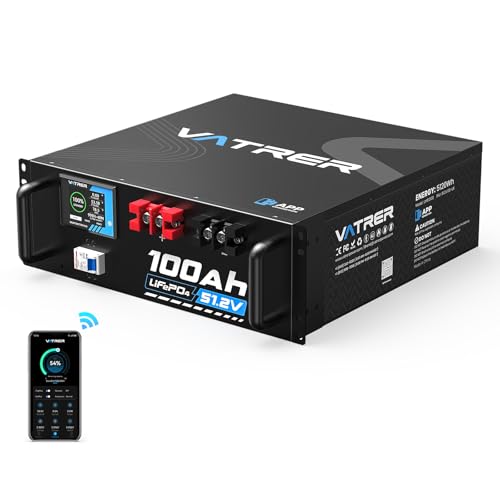
- 【Top-Flight Performance 】The 51.2V 100Ah liFePO4 battery is…
- 【Touch Screen & APP Monitoring】Our 51.2V 100Ah Lithium battery has a…
- 【One-touch Switch & Double Terminals】 48V 100Ah LiFePO4 battery support…
Why Lithium Batteries Outperform Lead-Acid in Golf Carts
The Science Behind Lithium’s Superior Performance
Lithium-ion (LiFePO4) batteries dominate golf cart applications because of their advanced chemistry and energy density. Unlike lead-acid batteries that rely on heavy lead plates and sulfuric acid, lithium batteries use lightweight lithium iron phosphate cells that deliver 95% usable capacity versus just 50% in lead-acid.
This means you get nearly double the effective power from the same nominal voltage. For example, a 48V lithium battery provides consistent voltage until fully discharged, while lead-acid models experience voltage sag under load, reducing speed and torque.
Key Advantages That Matter on the Course
Golfers experience three transformative benefits with lithium:
- Extended Range: A 100Ah lithium battery can power 36+ holes on a single charge, while lead-acid often struggles after 18. This is due to lithium’s lower internal resistance, which minimizes energy waste as heat.
- Faster Charging: Lithium accepts 3-4 times higher charge currents safely. Where a lead-acid battery needs 8+ hours, lithium models like the Eco Battery 48V recharge fully in just 2.5-4 hours.
- Weight Savings: At 60-70% lighter than equivalent lead-acid packs, lithium reduces cart weight by 300+ lbs. This translates to better hill climbing and less wear on tires/motors.
Debunking the Cost Myth
While lithium batteries have higher upfront costs (2-3x lead-acid), their total cost of ownership is actually lower. Consider:
- A quality lithium battery lasts 3,000-5,000 cycles versus 300-500 for lead-acid, eliminating frequent replacements
- Zero maintenance costs—no water refills, terminal cleanings, or equalization charges needed
- Energy savings of 20-30% due to higher efficiency, reducing electricity bills
Real-world example: A golf course replacing 100 lead-acid batteries annually at $200 each spends $20,000/year. Switching to lithium (10-year lifespan) cuts this to $6,000/year despite higher initial investment.
Climate Adaptability for Year-Round Use
Unlike lead-acid batteries that lose 50% capacity in freezing temperatures, premium lithium models like the Battle Born GC3 operate from -4°F to 140°F. Their built-in Battery Management Systems (BMS) automatically warm cells in cold weather and throttle power in extreme heat—critical for courses in seasonal climates.
Practical tip: Lithium’s consistent performance in temperature swings makes it ideal for hunters using golf carts in winter or desert resorts where summer heat kills lead-acid batteries prematurely.
How to Choose the Right Lithium Battery for Your Golf Cart
Your Power Requirements
Selecting the proper lithium battery begins with calculating your cart’s energy needs. A standard 48V golf cart typically requires:
- 30-50Ah for casual recreational use (18 holes or less)
- 60-80Ah for frequent players or hilly courses
- 100Ah+ for commercial operations or extended range needs
Example: A golfer playing 36 holes weekly with moderate hills should choose a minimum 60Ah battery like the RoyPow 48V 60Ah. The calculation: (36 holes × 1.5Ah per hole) × 1.25 safety margin = 67.5Ah requirement.
Critical Technical Specifications to Evaluate
Beyond capacity, examine these key metrics:
- Continuous Discharge Rate: Look for at least 100A for standard carts; 150A+ for lifted or high-performance models
- BMS Protection: Ensure the battery includes overcharge, over-discharge, and temperature cutoff features
- Cycle Life: Premium models offer 3,000+ cycles at 80% depth of discharge (DOD)
Pro Tip: The Eco Battery 48V 105Ah excels here with its 200A continuous discharge and Bluetooth-enabled BMS monitoring – perfect for carts with aftermarket accessories.
Physical Compatibility and Installation Factors
Measure your battery compartment carefully, noting:
- Maximum length/width/height constraints
- Terminal type and position (top/side mounted)
- Weight limitations (lithium typically weighs 30-60% less than lead-acid)
Common mistake: Buyers overlook terminal orientation, forcing expensive cable modifications. The Battle Born GC3 solves this with multiple terminal options and a universal tray design.
Budgeting for Long-Term Value
Consider these hidden cost factors:
- Warranty length (industry standard is 3-5 years; premium brands offer 8-10)
- Included accessories (charger compatibility, mounting hardware)
- Future expansion capability for adding second batteries
Case Study: A golf course saved $12,000 over 5 years by choosing higher-capacity lithium packs that eliminated midday charging sessions for their fleet.
Optimizing Lithium Battery Performance and Longevity
Advanced Charging Techniques for Maximum Battery Life
Proper charging habits can extend lithium battery lifespan beyond 10 years. Unlike lead-acid batteries that require full charges, lithium batteries thrive on partial charging:
| Charging Practice | Impact on Lifespan | Recommended Frequency |
|---|---|---|
| 80% Partial Charges | Extends cycle count by 2-3x | Daily use charging |
| 100% Full Charges | Required for capacity calibration | Once every 10-20 cycles |
| Storage Charge (50-60%) | Prevents calendar aging | For seasonal storage |
Pro Tip: The RoyPow 48V includes an optional charge limiter that automatically stops at 80% for daily use, then completes to 100% only when manually activated.
Temperature Management Strategies
While lithium batteries handle temperature extremes better than lead-acid, optimal operation occurs between 50°F-86°F. For extreme climates:
- Cold Weather: Pre-warm batteries using their built-in heaters (like Battle Born’s -4°F capability) before heavy loads
- Hot Weather: Park in shade and avoid charging when battery temps exceed 113°F
- Thermal Monitoring: Use Bluetooth-enabled BMS systems (Eco Battery feature) to track real-time cell temperatures
Load Management for Peak Efficiency
Lithium batteries deliver more consistent voltage, but smart load distribution prevents unnecessary strain:
- Balance accessory loads (lights, stereos) across multiple batteries in parallel setups
- Avoid sustained >80% discharge – set BMS warnings at 20% remaining capacity
- For lifted carts, upgrade to high-discharge models (200A+) to handle increased torque demands
Real-World Example: A Florida golf course extended their lithium fleet’s lifespan by 18 months simply by adding shaded charging stations and implementing 80% charge protocols during peak summer months.
Advanced Maintenance and Diagnostics
While lithium batteries are maintenance-free compared to lead-acid, these practices ensure peak performance:
- Monthly voltage checks across all cells (should stay within 0.05V variance)
- Annual capacity tests using professional load testers
- Firmware updates for smart BMS systems (available via manufacturer apps)
Common Mistake: Owners neglect to check torque on terminal connections annually, leading to resistance buildup and potential heat damage – a 5-minute check prevents this issue.
Safety Considerations and Professional Installation Guidelines
Critical Safety Features in Lithium Golf Cart Batteries
Modern lithium batteries incorporate multiple protection systems that go beyond lead-acid capabilities. The Battery Management System (BMS) is the nerve center that monitors:
- Cell Balancing: Automatically equalizes voltage across all cells (typically within ±0.02V)
- Thermal Runaway Prevention: Uses temperature sensors and current limiters to stop dangerous overheating
- Short Circuit Protection: Reacts within milliseconds to disconnect power during faults
Example: The Eco Battery’s BMS includes UL1973 certification and can withstand 150% overcurrent for 30 seconds before shutdown – crucial for handling motor startup surges.
Professional Installation Best Practices
Proper installation ensures safety and maximizes performance:
- Electrical Isolation: Always disconnect main power and remove all jewelry before installation
- Torque Specifications: Terminal connections typically require 8-10 N·m (70-90 in-lbs) – under/over-tightening causes resistance or damage
- Ventilation: Maintain 1″ clearance around batteries despite lithium’s lower heat output
- Grounding: Verify proper chassis ground connection (resistance <0.1Ω)
Wiring and System Compatibility Checks
Before connecting lithium batteries:
| Component | Inspection Point | Acceptable Range |
|---|---|---|
| Charger | Output voltage | Must match battery specs (±0.5V) |
| Cables | Wire gauge | Minimum 4AWG for 48V systems |
| Controller | Low-voltage cutoff | Adjustable to lithium range (40V for 48V systems) |
Pro Tip: Battle Born provides color-coded wiring kits with their GC3 series to prevent reverse polarity mistakes during installation.
Troubleshooting Common Issues
When facing performance problems:
- No Power Output: Check BMS reset button (often trips at 2.5V underload)
- Reduced Range: Perform capacity test – if below 80% of rated Ah, contact manufacturer
- Error Codes: Consult manual (e.g., RoyPow’s E01 indicates over-temperature condition)
Safety Warning: Never bypass the BMS or attempt to open battery cases – lithium cells contain hazardous voltages even when “discharged”. Always consult certified technicians for complex issues.
The Future of Lithium Golf Cart Batteries: Trends and Innovations
Emerging Battery Technologies on the Horizon
The lithium battery market is evolving rapidly, with several promising developments:
| Technology | Potential Benefits | Expected Commercialization |
|---|---|---|
| Solid-State Lithium | 2x energy density, zero fire risk | 2026-2028 (golf cart applications) |
| Silicon-Anode Batteries | 30% faster charging | 2025 (pilot programs) |
| Self-Healing Electrolytes | 5x cycle life extension | 2027+ |
Current lithium batteries already represent a 400% improvement over 2015 models in terms of cycle life and energy density. The Eco Battery 48V series now incorporates some pre-commercial silicon additives that boost capacity by 12% compared to standard LiFePO4.
Smart Battery Systems and IoT Integration
The next generation of golf cart batteries will feature:
- Predictive Maintenance: AI algorithms analyzing usage patterns to warn of potential issues weeks in advance
- Dynamic Performance Adjustment: Automatic tuning based on terrain, load, and weather conditions
- Fleet Management Integration: Cloud-based monitoring for golf courses with 50+ carts
RoyPow’s latest prototypes include GPS tracking and theft prevention systems directly integrated into the battery management system.
Environmental Impact and Recycling Advancements
Modern lithium batteries offer significant ecological advantages:
- 98% Recyclability: New hydrometallurgical processes recover 95%+ of lithium, nickel, and cobalt
- Second-Life Applications: Used golf cart batteries now powering solar storage systems for 7-10 additional years
- Reduced Carbon Footprint: Current production emits 40% less CO2 than 2018 methods
Industry leaders like Battle Born have established take-back programs that repurpose 100% of returned batteries, with some components being reused up to four times.
Cost Projections and Market Trends
Lithium battery prices have dropped 18% annually since 2018, with projections showing:
- 2025: $150/kWh (down from $280/kWh in 2020)
- 2030: Potential price parity with lead-acid when considering total lifecycle costs
- Market Share: Expected to capture 75% of new golf cart battery sales by 2027
Early adopters who invested in lithium systems in 2020 are now seeing ROI periods as short as 2.3 years due to reduced maintenance and extended lifespan benefits.
Advanced System Integration and Performance Tuning
Optimizing Lithium Batteries for Modified Golf Carts
High-performance golf carts require specialized battery configurations. For lifted carts with larger tires or upgraded motors (500A+ controllers), consider:
- Parallel Battery Systems: Combining two 48V lithium batteries doubles capacity while maintaining voltage
- High-Rate Discharge Models: Look for 2C+ rated batteries (e.g., 200A continuous from 100Ah battery)
- Voltage Stabilization: Add capacitor banks (minimum 5000μF) to handle instantaneous current demands
Example: A golf cart with 23″ tires and 650A controller performs optimally with two Eco Battery 48V 105Ah units in parallel, providing 210Ah total capacity and 400A continuous discharge capability.
Integration with Solar Charging Systems
Lithium batteries pair exceptionally well with solar due to their high charge acceptance and low self-discharge:
- Charge Controller Compatibility: Must support lithium charge profiles (58.4V absorption for 48V systems)
- Array Sizing: Minimum 800W solar for maintenance charging; 2000W+ for full daily recharge
- Wiring Configuration: Use MPPT controllers with 96V input for 48V battery systems
Pro Tip: Battle Born’s batteries include built-in solar charge optimization when paired with Victron controllers, increasing efficiency by 12-15%.
Advanced Performance Monitoring
Modern lithium systems offer unprecedented data access:
| Parameter | Monitoring Method | Optimal Range |
|---|---|---|
| Cell Balance | Bluetooth BMS | <±0.03V variance |
| Internal Resistance | Professional tester | <0.5mΩ per cell |
| State of Health | Cycle count analysis | >80% after 2000 cycles |
Troubleshooting Complex Systems
When integrating multiple components:
- Voltage Drop Issues: Measure at full load – >3% drop indicates undersized cables
- BMS Shutdowns: Usually caused by parallel battery voltage differences >0.5V
- Charging Faults: Most often communication errors between lithium-compatible chargers and BMS
Advanced Solution: Professional installers use CAN bus analyzers to diagnose communication issues in smart battery systems, particularly when integrating with aftermarket controllers.
Professional Maintenance Protocols and Long-Term Performance Assurance
Comprehensive Battery Health Monitoring Framework
Implementing a structured monitoring program ensures peak lithium battery performance throughout its lifespan:
| Checkpoint | Frequency | Acceptable Parameters | Corrective Actions |
|---|---|---|---|
| Cell Voltage Variance | Monthly | <50mV difference | Balance charge if >75mV |
| Capacity Test | Annual | >90% of rated Ah | BMS calibration if <85% |
| Terminal Resistance | Quarterly | <0.2Ω to chassis | Clean and retorque if >0.5Ω |
Advanced Diagnostic Procedures
Professional maintenance technicians should perform these comprehensive evaluations:
- Electrochemical Impedance Spectroscopy: Detects early cell degradation (should show <5% increase from baseline)
- Thermal Imaging: Identifies hot spots indicating connection issues or cell imbalance
- Deep Cycle Analysis: Measures actual energy delivery versus rated capacity at various discharge rates
Example: A golf course fleet manager discovered 15% premature capacity loss traced to incompatible chargers through quarterly impedance testing, saving $18,000 in potential battery replacements.
Optimization Strategies for Maximum Lifespan
Extend battery life beyond manufacturer specifications with these professional techniques:
- Seasonal Storage Protocols: Maintain 50% SOC with monthly top-up charges during off-season
- Load Balancing: Distribute accessory loads evenly across parallel battery banks
- Temperature Management: Install thermal pads in extreme climates to maintain optimal 15-35°C operating range
Quality Assurance and Validation Testing
Professional-grade validation includes:
- Cycle Life Verification: 50-cycle test protocol simulating 5 years of use
- Vibration Testing: 500 hours of simulated cart operation on various terrains
- Environmental Stress Testing: -20°C to 60°C thermal cycling validation
Pro Tip: Leading manufacturers like Eco Battery provide detailed test reports upon request – always review these when evaluating premium lithium systems for commercial applications.
Conclusion: The Smart Choice for Golf Cart Power
Lithium golf cart batteries represent a transformative upgrade, offering 3-5x longer lifespan, 50% weight reduction, and maintenance-free operation compared to traditional lead-acid options.
As we’ve explored, their superior energy density, faster charging capabilities, and advanced BMS protection deliver unmatched performance across all course conditions. While the initial investment is higher, the long-term savings in replacement costs and energy efficiency make lithium the clear economic choice.
Whether you’re a weekend golfer or manage a commercial fleet, upgrading to lithium technology like the Eco Battery 48V or Battle Born GC3 ensures reliable power for years to come.
Ready to experience the lithium advantage? Consult with certified installers today to find your ideal battery solution and start enjoying worry-free golf cart performance.
Frequently Asked Questions About Lithium Golf Cart Batteries
What’s the actual lifespan difference between lithium and lead-acid batteries?
Lithium batteries typically last 3,000-5,000 cycles compared to just 300-500 cycles for lead-acid. In practical terms, a quality lithium battery like the Battle Born GC3 will last 8-10 years with daily use, while lead-acid requires replacement every 2-3 years.
This accounts for lithium’s ability to handle deeper discharges (100% DoD vs 50% for lead-acid) without significant degradation.
Can I directly replace my lead-acid batteries with lithium without other modifications?
While lithium batteries physically fit in most carts, you’ll need to:
1) Verify charger compatibility (lithium requires specific voltage profiles),
2) Check controller settings (adjust low-voltage cutoff to ~40V for 48V systems), and
3) Possibly upgrade cables (lithium’s higher current capacity may require thicker gauge wiring).
Some models like Eco Battery include adapter kits for seamless conversion.
How do lithium batteries perform in extreme temperatures?
Premium lithium batteries operate in -4°F to 140°F ranges, outperforming lead-acid which loses 50% capacity below freezing. However, optimal performance occurs between 50°F-86°F. In cold climates, models with built-in heaters (like RoyPow’s self-warming feature) maintain performance. In heat, ensure proper ventilation and avoid full charges above 113°F to prolong lifespan.
What maintenance do lithium golf cart batteries require?
Lithium batteries are essentially maintenance-free compared to lead-acid. Key differences:
1) No water refilling,
2) No equalization charges needed,
3) No terminal corrosion cleaning.
However, we recommend monthly state-of-charge checks and annual capacity tests to monitor health. Always store at 50-60% charge if not using for extended periods.
Are lithium batteries safe given concerns about fires?
Modern LiFePO4 (lithium iron phosphate) batteries used in golf carts are inherently safer than other lithium types. They’re non-combustible, won’t explode, and include multiple protections:
1) Cell-level fuses,
2) Thermal cutoff switches,
3) Robust BMS monitoring.
UL1973 certified batteries (like Eco Battery) undergo rigorous safety testing including nail penetration and overcharge tests.
How much weight savings can I expect with lithium batteries?
A 48V lithium setup typically weighs 60-70% less than equivalent lead-acid. For example:
- Lead-acid: 4x12V batteries @ 65lbs each = 260lbs total
- Lithium: 1x48V battery @ 100-140lbs total
This 120-160lb reduction improves hill climbing, reduces tire wear, and increases payload capacity.
What’s the true cost comparison over 10 years?
While lithium costs 2-3x more upfront ($1,200-$2,500 vs $600-$900 for lead-acid), the 10-year savings are substantial:
- Lead-acid: 4 replacements @ $700 + $200 maintenance = $3,000
- Lithium: 1 battery @ $2,000 + $0 maintenance = $2,000
Add in 20-30% energy savings, and lithium pays for itself in 3-5 years.
Can I add more lithium batteries later to extend range?
Yes, but with important considerations:
1) Batteries must be same model and age (within 6 months),
2) Capacity should match within 10%,
3) Requires proper parallel connection kit.
For example, adding a second Eco Battery 48V 105Ah doubles your range to 70+ miles. Always consult the manufacturer for specific expansion guidelines.